What Are Fanless Mini PCs?
Fanless Mini PCs are compact, solid-state computing systems designed for environments where reliability, silence, and durability are paramount. By eliminating moving parts like cooling fans, these systems offer superior dust and contaminant resistance, reduced maintenance, and silent operation. They are powered by efficient, low-TDP (Thermal Design Power) processors that generate minimal heat, allowing for passive cooling through advanced heatsink designs integrated into the chassis. This makes them ideal for 24/7 operation in challenging conditions.
Key Specifications and Technical Details
The core of a modern fanless mini PC is its processor. Common choices include Intel's N-series (like the N100, N95) or Celeron series, which balance performance with exceptional power efficiency. Key specifications to consider are:
-
Processor: Intel processors (e.g., N100, 4 cores, up to 3.4 GHz) are common for their integrated graphics and x86 compatibility.
-
Memory: Typically 8GB to 16GB of DDR4 RAM, sufficient for most industrial and commercial workloads.
-
Storage: M.2 SATA or NVMe SSDs from 128GB to 512GB provide fast, reliable storage without moving parts.
-
Connectivity: Multiple Gigabit Ethernet ports, USB 3.2 ports, HDMI/DisplayPort outputs, and optional Wi-Fi/Bluetooth.
-
Power: Low-voltage DC input (e.g., 12V), enabling easy integration with industrial power systems or PoE (Power over Ethernet).
Use Cases and Applications
The rugged and reliable nature of fanless mini PCs makes them suitable for a wide range of applications beyond standard office use:
-
Digital Signage & Kiosks: Silent operation and reliability for public displays in retail, transportation hubs, and museums.
-
Industrial Automation: As a controller or HMI (Human-Machine Interface) on the factory floor, resistant to dust, vibrations, and wide temperature ranges.
-
Thin Client & VDI: Dense, silent terminals for virtual desktop infrastructure in call centers, hospitals, and offices.
-
Edge Computing: Processing data locally in IoT networks, retail environments, or smart city applications.
-
Embedded Systems: Integrated into medical devices, transportation systems, or security setups where space is limited and reliability is critical.
Comparison: Fanless vs. Traditional Mini PCs
| Feature | Fanless Mini PC | Traditional Mini PC (with Fan) |
|---|---|---|
| Cooling | Passive (Heatsink) | Active (Fan) |
| Noise | Silent | Audible fan noise |
| Durability | High (No moving parts, sealed) | Lower (Fan is a point of failure) |
| Dust Resistance | Excellent | Requires regular cleaning |
| Typical Use Case | Industrial, Embedded, 24/7 Operation | Office, Home, Gaming |
| Processor Power | Lower TDP, Efficient | Can accommodate higher TDP, more powerful CPUs |
Thinvent Fanless Mini PC Solutions
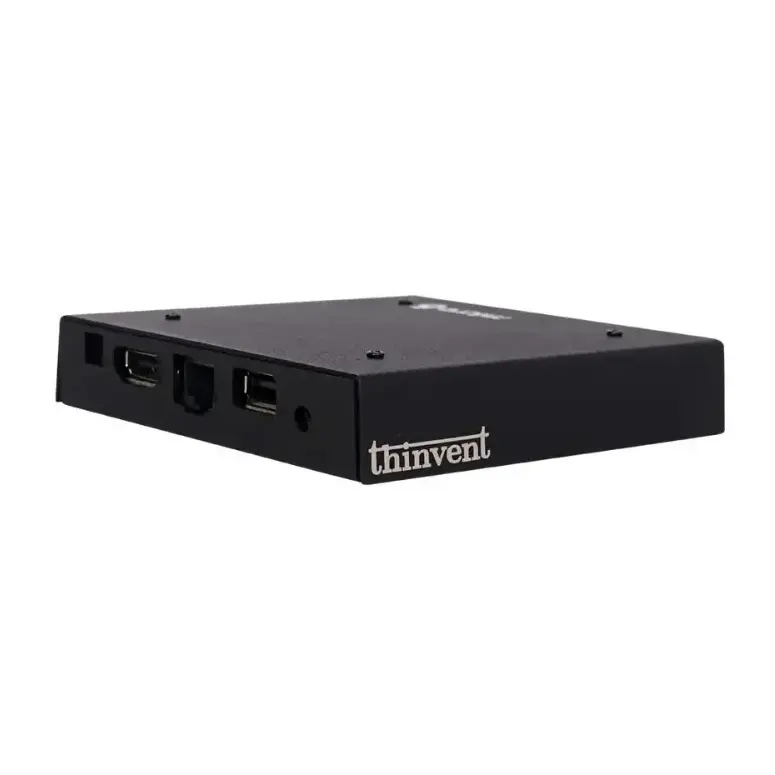
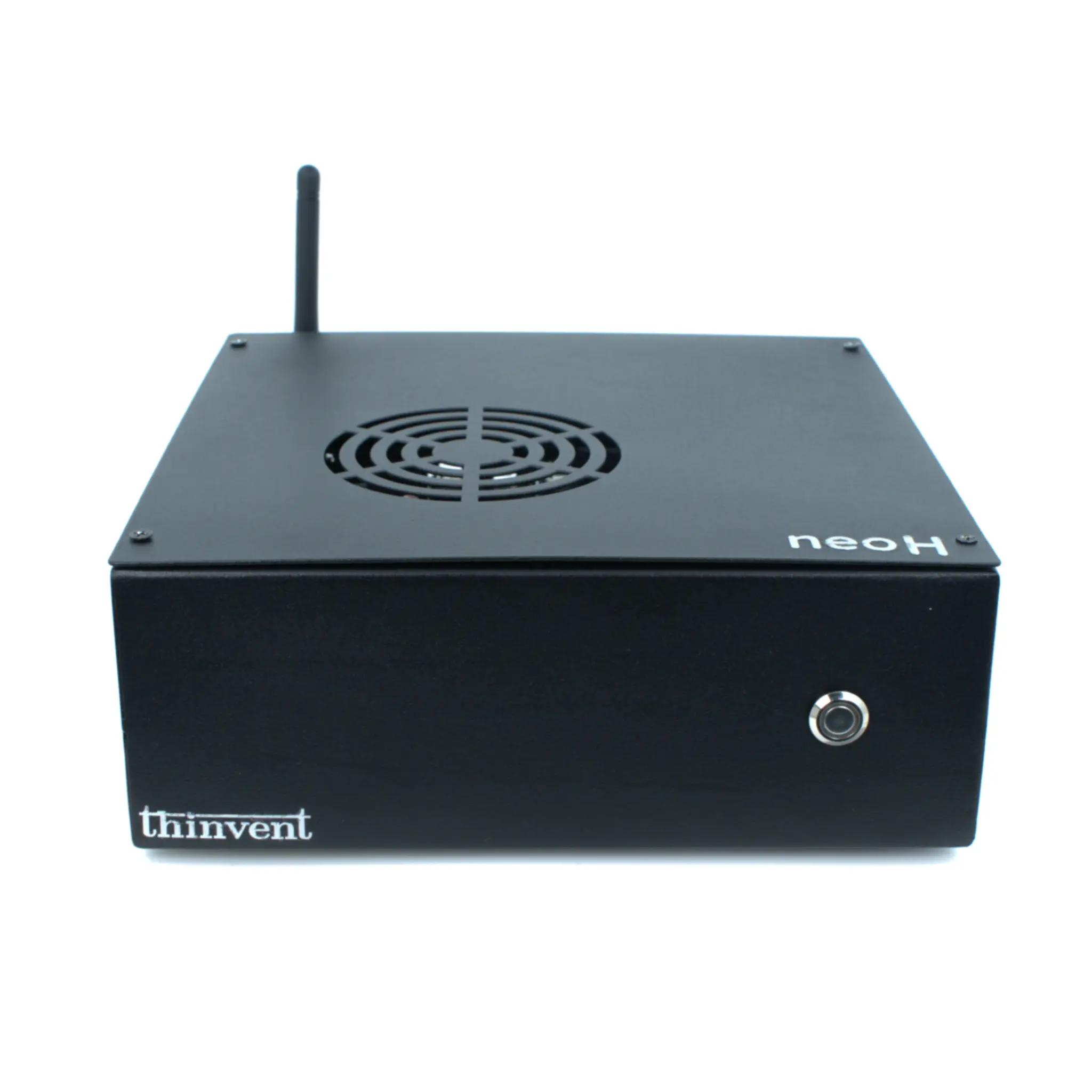
Thinvent specializes in robust, fanless industrial computing solutions. Our Aero Mini PC series exemplifies this commitment, featuring efficient Intel processors like the N100 in a compact, all-metal chassis designed for passive cooling. These systems come configured with ample RAM and fast SSD storage, supporting a variety of operating systems including Windows 11 IoT, Windows 11 Pro, and Linux distributions like Ubuntu. Built for global deployment, Thinvent's fanless PCs are engineered for reliability in demanding applications, from digital signage and kiosks to industrial control and edge computing nodes.