Understanding Wyse and HP Thin Clients
The query "Wyse HP" refers to two major brands in the Thin Client and Virtual Desktop Infrastructure (VDI) market. Dell Wyse and HP are leading manufacturers of dedicated endpoint devices designed to connect to centralized servers or cloud desktops. These devices are optimized for energy efficiency, security, and manageability, running specialized operating systems like Dell Wyse ThinOS or HP's ThinPro. They are purpose-built for accessing virtualized applications and desktops from Citrix, VMware, or Microsoft RDS, offering a streamlined, low-maintenance computing experience.
Key Specifications and Modern Alternatives
Traditional thin clients like those from Wyse and HP typically feature low-power processors (often ARM or Intel Atom/Celeron), minimal onboard storage, and fanless designs for silent operation. Modern industrial mini PCs now offer a compelling alternative, providing similar benefits with greater flexibility. Key specifications for VDI-optimized devices include:
-
Fanless Cooling: Essential for 24/7 operation in quiet environments like offices, hospitals, and retail.
-
Efficient Processors: Intel N-series processors (like the N100) offer excellent performance-per-watt for multiple virtual desktop sessions.
-
Adequate Memory: 8GB to 16GB of RAM is standard for smooth multitasking in virtual environments.
-
Multiple Display Outputs: Support for dual monitors via HDMI or DisplayPort is common for productivity.
-
Robust Connectivity: Gigabit Ethernet is critical for low-latency network performance, with optional Wi-Fi for flexibility.
Use Cases and Applications
Devices in this category are deployed wherever centralized management, security, and reliability are paramount.
-
Corporate VDI: Secure access to corporate virtual desktops from call centers and open-plan offices.
-
Healthcare: Accessing Electronic Health Records (EHR) systems from nursing stations, with easy sterilization of fanless enclosures.
-
Digital Signage & Kiosks: Reliable, always-on operation for driving menu boards, information displays, and interactive terminals.
-
Education: Providing a consistent desktop experience in computer labs and libraries, with centralized software updates.
Comparison: Traditional Thin Client vs. Modern Industrial Mini PC
| Feature | Traditional Thin Client (e.g., Wyse/HP) | Modern Industrial Mini PC |
|---|---|---|
| Primary OS | Proprietary ThinOS, ThinPro, or embedded Windows IoT | Flexible: Windows 11 Pro, Linux, or without OS |
| Processing | Often locked to vendor-specific, lower-power chips | Wider range, including efficient Intel N-series processors |
| Storage | Minimal, often flash-based for OS only | Configurable SSDs (128GB+), allowing local applications |
| Management | Vendor-specific management suites | Can be managed via standard tools like Microsoft Intune or third-party VDI brokers |
| Flexibility | Purpose-built for VDI | Can function as a thin client, standalone PC, or edge server |
Thinvent's VDI-Optimized Industrial Solutions
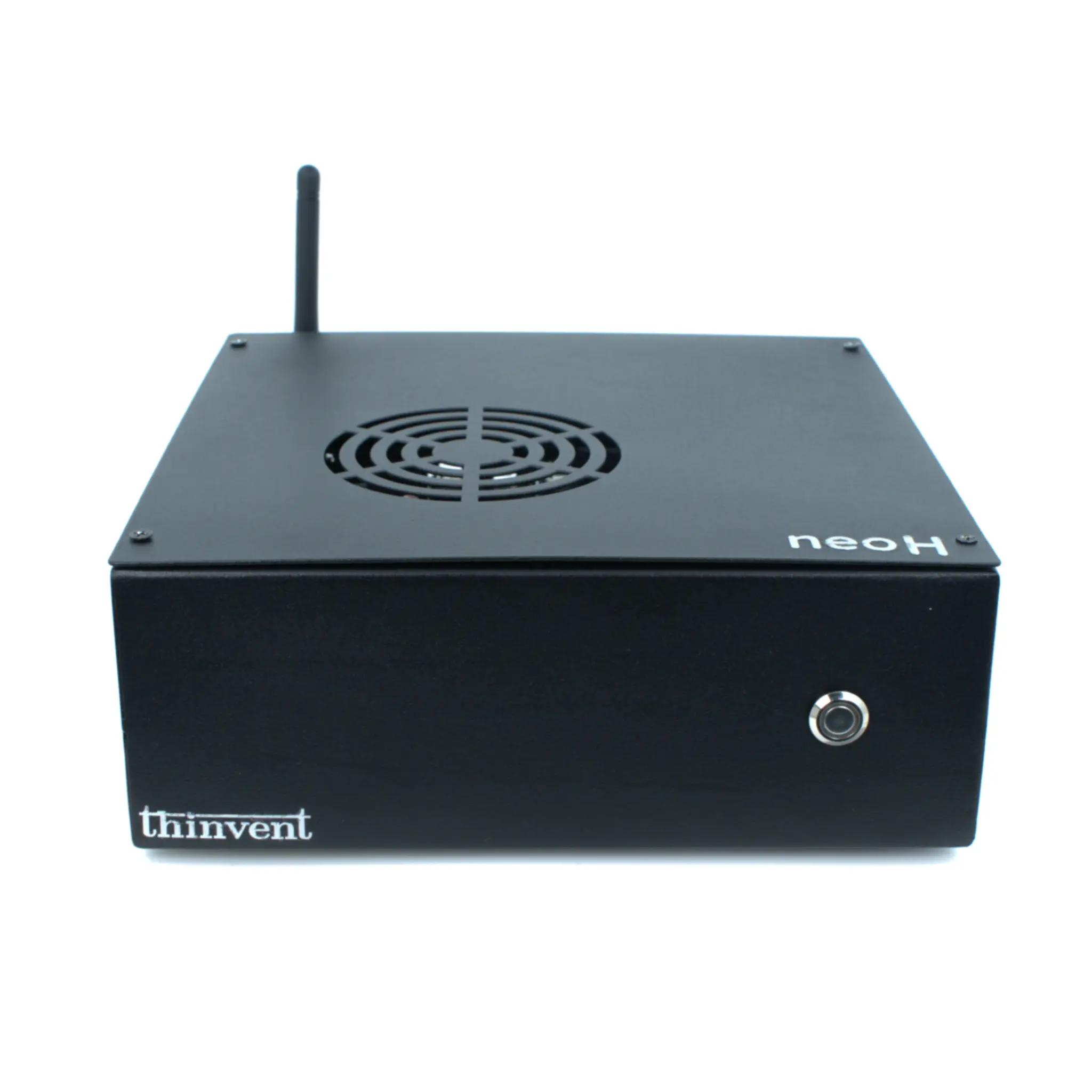
Thinvent offers a range of robust, fanless industrial computers that serve as powerful and flexible alternatives to traditional thin clients. Our Aero Mini PC series, for example, is engineered for reliability in demanding environments. Featuring efficient Intel N-series processors, fanless aluminum heatsink designs, and a wide range of operating system options (including Windows 11 IoT/Pro and various Linux distributions), these devices provide the perfect blend of VDI readiness and standalone capability. They are built for 24/7 operation, making them ideal for upgrading legacy Wyse or HP thin client deployments with more powerful, versatile, and future-proof hardware.