What Are Xeon Computers?
Xeon computers are high-performance workstations and servers built around Intel's Xeon processor family. Unlike standard consumer CPUs, Xeon processors are engineered for reliability, scalability, and sustained performance in mission-critical environments. Key characteristics include support for Error-Correcting Code (ECC) memory, which detects and corrects data corruption, higher core counts for parallel processing, and support for larger amounts of RAM. These features make Xeon systems ideal for handling complex, data-intensive workloads where stability and computational power are paramount.
Key Specifications and Technical Details
Xeon-based systems are defined by their server-grade architecture. They typically feature multi-socket motherboard designs, allowing for two or more physical CPUs in a single system to dramatically increase core and thread counts. They support vast amounts of registered ECC DDR4 or DDR5 memory, often exceeding 1TB, which is essential for large datasets in scientific computing and virtualization. Storage configurations are equally robust, with support for multiple NVMe SSDs and hardware RAID controllers for data redundancy and speed. These systems also offer extensive connectivity, including multiple high-speed Ethernet ports (10GbE, 25GbE), numerous PCIe lanes for expansion cards, and advanced remote management capabilities like Intel vPro.
Primary Use Cases and Applications
The robust architecture of Xeon computers makes them indispensable in professional and industrial sectors. They are the backbone of data centers and cloud servers, providing the computational power for virtualization and web hosting. In scientific research and engineering, they run complex simulations, finite element analysis (FEA), and computational fluid dynamics (CFD). The media and entertainment industry relies on them for 3D rendering, video editing, and animation due to their high multi-core performance. Other critical applications include financial modeling, database management, and AI/ML development, where processing large datasets reliably is non-negotiable.
Comparison: Xeon vs. High-End Consumer CPUs
| Feature | Intel Xeon Processors | High-End Consumer CPUs (e.g., Intel Core i9) |
|---|---|---|
| Primary Use | Servers, Workstations, Mission-Critical Systems | Gaming, Content Creation, High-End Desktops |
| ECC Memory Support | Yes (Critical for data integrity) | Typically No |
| Multi-Socket Support | Yes (Scalability) | No |
| Core/Thread Focus | Very High core counts for parallel workloads | High performance, optimized for single-threaded tasks |
| Reliability & Validation | Extended lifecycle, validated for 24/7 operation | Standard consumer lifecycle |
| Integrated Graphics | Often not included (requires discrete GPU) | Usually included |
Thinvent's Industrial Computing Solutions
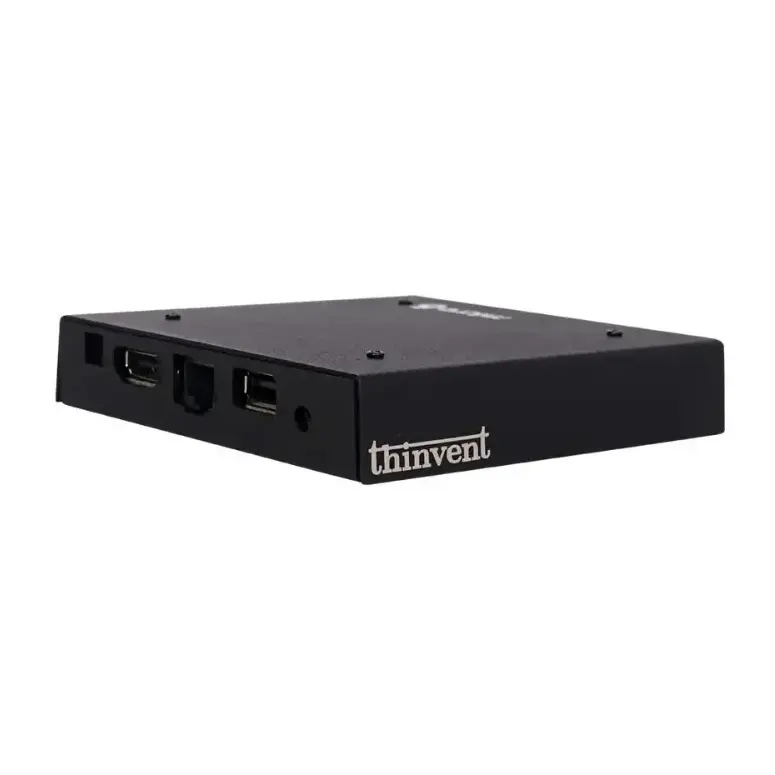
While Thinvent's current product portfolio showcased on this page focuses on efficient, fanless mini PCs powered by Intel's N-series processors for edge computing and digital signage, our engineering expertise extends to robust industrial computing. For applications demanding Xeon-level performance—such as industrial automation control servers, high-performance computing clusters at the edge, or ruggedized data acquisition systems—Thinvent can develop custom solutions. We leverage our experience in creating reliable, fanless, and wide-temperature hardware to build systems that meet the specific thermal, power, and durability requirements of industrial environments, potentially integrating server-grade components where the application demands it.