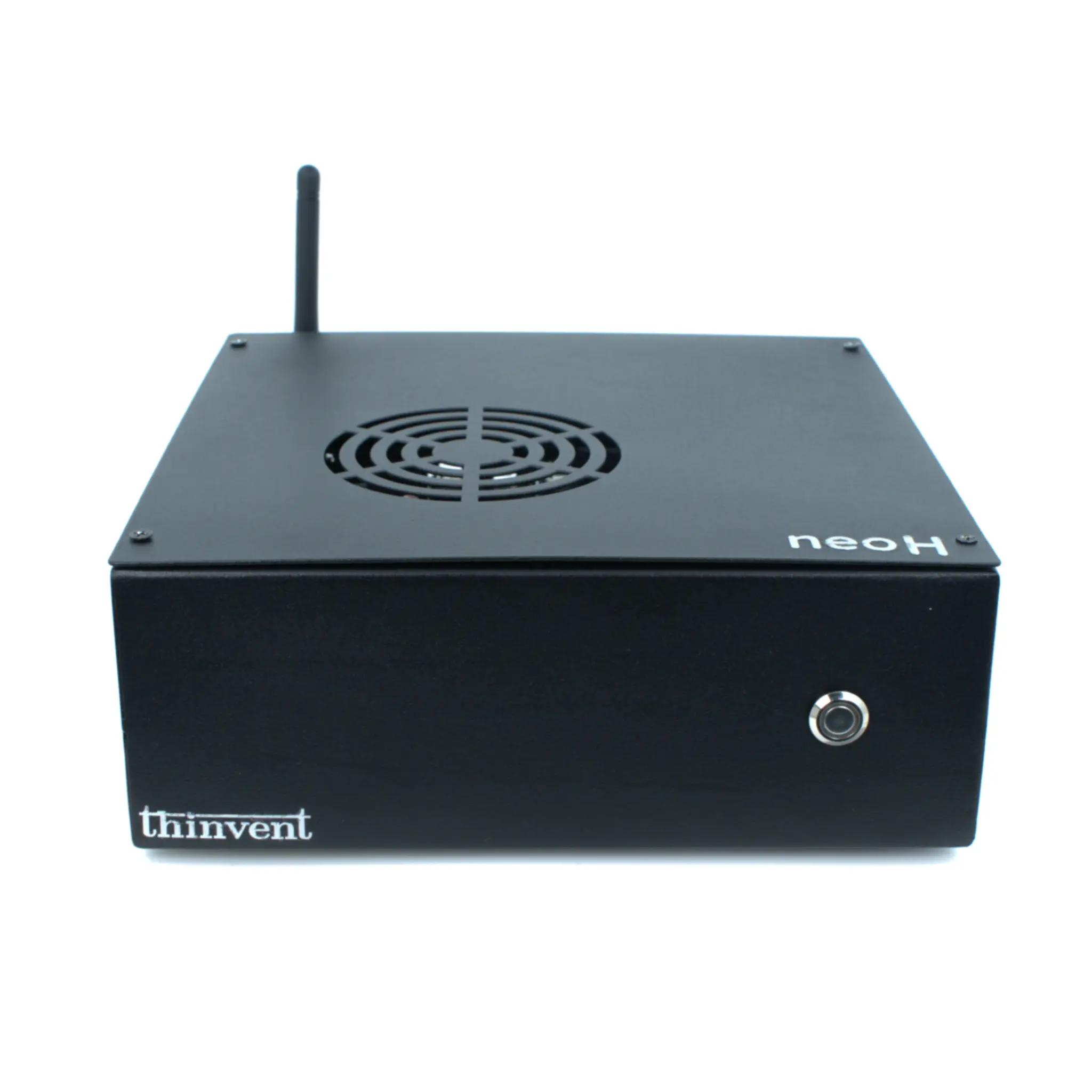
What is a Z800 Workstation?
The HP Z800 was a high-end, dual-socket workstation from the late 2000s and early 2010s, renowned for its exceptional performance in demanding professional environments. It was built around Intel's Xeon 5500/5600 series processors (Nehalem/Westmere microarchitecture), supporting two CPUs for massive parallel processing power. Key specifications included support for up to 192GB of DDR3 ECC RAM, multiple PCIe x16 slots for professional-grade graphics cards (like NVIDIA Quadro or AMD FirePro), and robust storage options with RAID support. Its primary use cases were in fields requiring intense computational power, such as 3D rendering, computer-aided design (CAD), scientific simulation, video editing, and financial modeling.
Modern Industrial Workstation Equivalents
Today, the core need for reliable, high-performance computing in industrial settings is met by modern, compact, and fanless industrial PCs. While the large tower form factor of the Z800 is less common, the performance requirements are addressed by newer processor architectures that offer greater efficiency and power in smaller packages. Key modern specifications that match or exceed Z800-era performance include multi-core Intel processors (i5, i7, and newer generations), support for fast DDR4/DDR5 RAM, NVMe SSD storage for rapid data access, and robust I/O connectivity including multiple displays, Gigabit Ethernet, and USB 3.2/Type-C ports.
Applications and Use Cases
Modern industrial workstations built on these principles are deployed in similar demanding scenarios:
-
Engineering & Design: Running CAD/CAM/CAE software like SolidWorks, AutoCAD, or Siemens NX.
-
Media & Entertainment: Video editing, color grading, and 3D animation.
-
Scientific Computing: Data analysis, simulation, and research applications.
-
Industrial Automation: As a control unit for complex machinery, PLC programming, and HMI interfaces.
-
Digital Signage & Control Rooms: Driving multiple high-resolution displays in mission-critical environments.
Their fanless, solid-state design offers superior reliability in harsh conditions with dust, vibrations, and wide temperature ranges—a significant advantage over traditional consumer-grade towers.
Thinvent's Industrial Computing Solutions
While Thinvent does not manufacture legacy systems like the Z800, our product portfolio is designed to fulfill the same core mission: delivering dependable, high-performance computing for professional and industrial applications. Our systems emphasize modern efficiency, rugged reliability, and compact form factors.
Thinvent Aero Mini PC Series Our Aero Mini PC line exemplifies the modern approach to industrial computing. Featuring efficient Intel processors like the N100, these systems provide a balance of performance and low power consumption in a ultra-compact, fanless chassis. They are ideal for space-constrained environments where reliability is paramount. Key features often include:
-
Processor: Intel N100 (4 cores, up to 3.4GHz)
-
Memory: Configurations with 16GB DDR4 RAM
-
Storage: Fast SSD options (e.g., 128GB)
-
Operating System: Choice of Windows 11 IoT/Pro, Ubuntu Linux, or other embedded OS.
-
Design: Fanless operation for silent and maintenance-free use in industrial settings.
For users requiring more power for workstation-like tasks, Thinvent offers configurations with higher-tier Intel Core i3, i5, and i7 processors from the latest generations, paired with increased RAM and storage capacities. This allows our solutions to scale from basic industrial automation to more demanding design and analysis workloads, all within robust, industrial-grade enclosures.