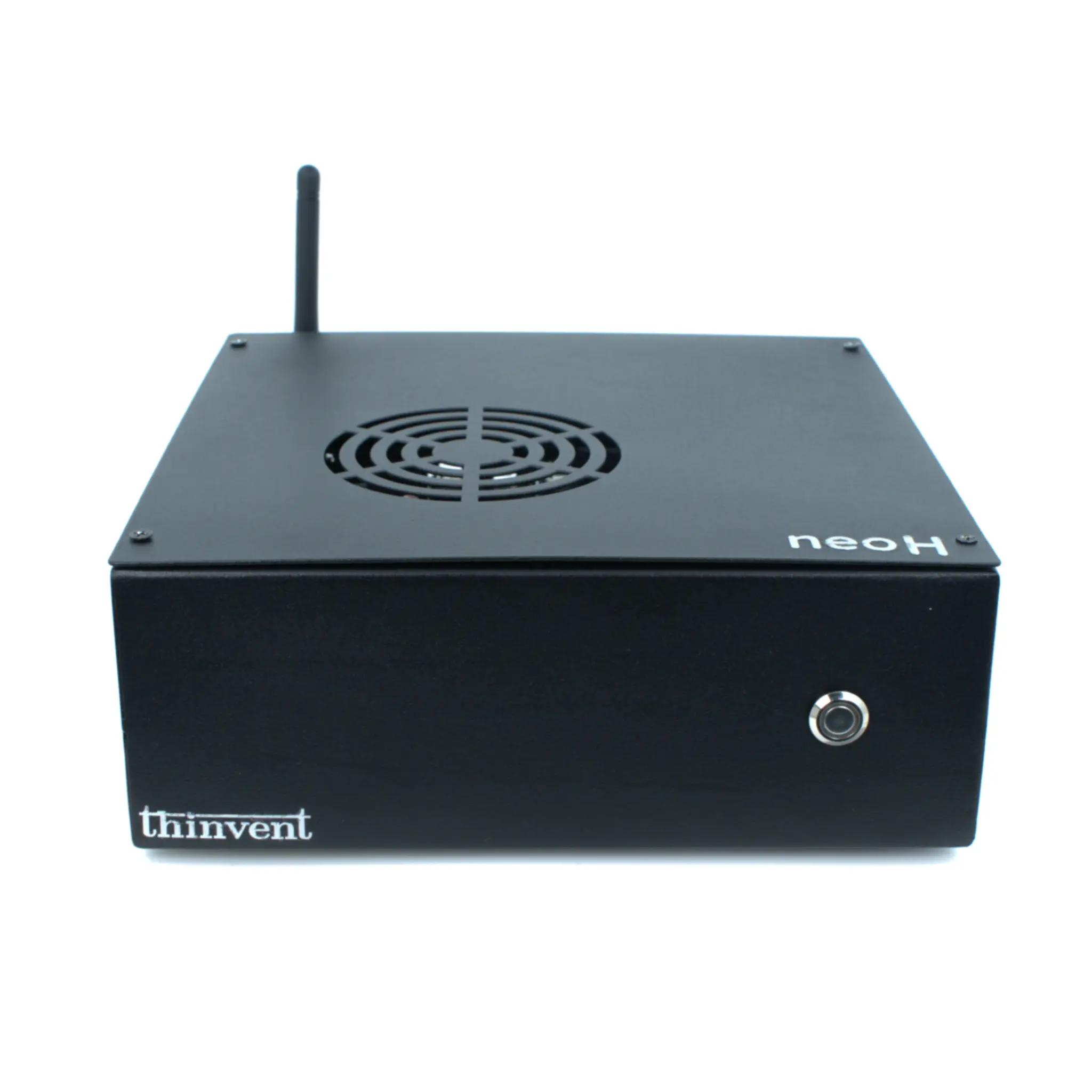
What is a Zero Client PC?
A Zero Client PC is a specialized endpoint device designed exclusively for Virtual Desktop Infrastructure (VDI) and cloud computing environments. Unlike traditional PCs or thin clients, a true zero client contains no local operating system, storage, or applications. It is a stateless hardware terminal that boots directly from the network, connecting to a centralized server where all processing, data, and software reside. This architecture provides the ultimate in security, manageability, and energy efficiency for modern digital workspaces.
Key Specifications and Technical Details
Zero clients are defined by their minimal hardware footprint. They typically feature a low-power processor (often ARM-based or Intel Atom/Celeron N-series), minimal RAM (often 2-4GB), and no local storage like an SSD. Their primary function is to handle network connectivity, video decoding, and peripheral I/O. Key interfaces include multiple display outputs (HDMI, DisplayPort), USB ports for keyboard/mouse, and reliable Gigabit Ethernet or, increasingly, Wi-Fi 6 for network access. They rely on specialized firmware to implement remote display protocols like PCoIP, Blast Extreme, or HDX to deliver the virtual desktop experience.
Primary Use Cases and Applications
The primary application for zero clients is in large-scale, secure enterprise deployments where centralized IT control is paramount. They are ideal for:
-
Call Centers & Office Workstations: Providing standardized, secure desktops for task workers where data cannot leave the data center.
-
Healthcare (Hospitals, Clinics): Enabling access to Electronic Health Records (EHR) systems without storing sensitive patient data on the endpoint, aiding HIPAA/GDPR compliance.
-
Education & Libraries: Deploying durable, low-maintenance computer labs where software is managed centrally on servers.
-
Financial Services & Government: Meeting stringent security requirements by eliminating data-at-rest risks on the endpoint device.
-
Industrial Kiosks & Digital Signage: As a reliable, fanless display controller for content served from a central server.
Zero Client vs. Thin Client vs. Mini PC
| Feature | Zero Client | Thin Client | Mini PC / Traditional PC |
|---|---|---|---|
| Local OS & Storage | None (Stateless) | Lightweight OS (e.g., ThinOS, Linux) | Full OS (Windows, Linux) |
| Local Processing | Minimal (Protocol Decoding) | Low to Moderate | Full, High Performance |
| Management | Centralized, Firmware-based | Centralized, Image-based | Individual, Complex |
| Security | Highest (No local data) | High | Varies (Local data risk) |
| Total Cost of Ownership | Lowest (Energy, Management) | Low | Higher |
| Best For | Static, identical VDI workloads | Flexible, lighter VDI/Citrix | General-purpose computing |
Thinvent Solutions for Zero Client Deployments
While Thinvent specializes in robust, fanless Mini PCs and Industrial PCs that excel as powerful thin clients or local workstations, our product philosophy aligns with the core needs of zero-client environments: reliability, manageability, and low power consumption. For organizations implementing VDI, our compact, fanless systems with Intel N-series processors provide an excellent, durable endpoint option. They offer the flexibility to run a lightweight thin client OS or be configured as a highly efficient stateless device, bridging the gap between the ultra-specialized zero client and the versatile industrial mini PC. Explore our range of compact, low-power computing solutions built for 24/7 operation in demanding environments.