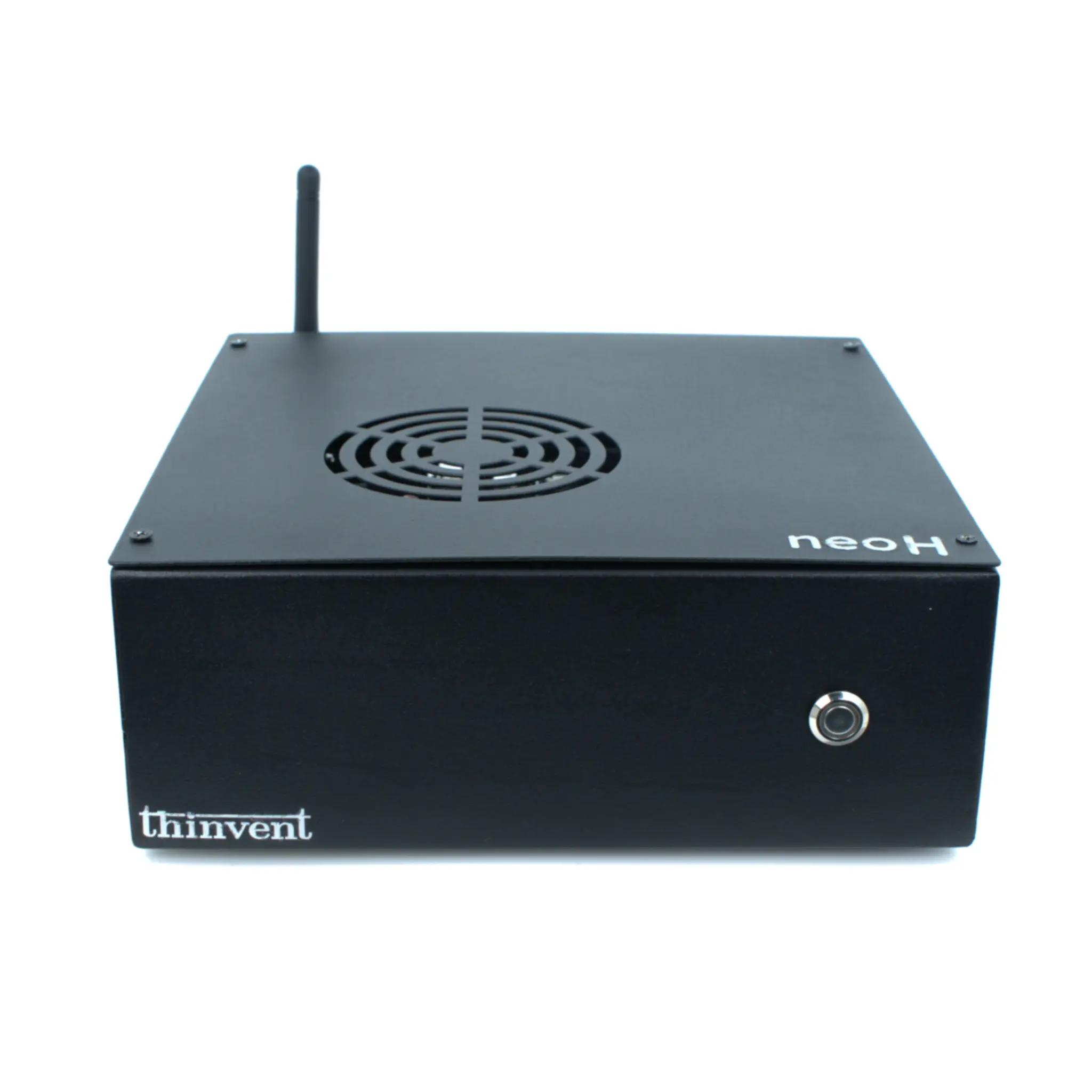
What is an Industrial Server?
An industrial server is a specialized computing device designed for continuous, reliable operation in demanding environments. Unlike standard servers, they are built with ruggedized components, often featuring fanless cooling for silent operation and enhanced durability against dust, vibration, and wide temperature ranges. These systems are engineered for 24/7 uptime, making them ideal for critical infrastructure, data acquisition, and edge computing applications where standard IT equipment would fail.
Key Specifications and Technical Details
Industrial servers prioritize reliability, connectivity, and processing power tailored for specific tasks. Key specifications to consider include:
-
Processor: Multi-core Intel processors (e.g., i3, i5, i7 series) or efficient ARM-based CPUs for balanced performance and power consumption.
-
Memory: High-capacity RAM (16GB, 32GB, 64GB+) to handle multiple applications and data streams simultaneously.
-
Storage: Fast, reliable SSD storage (256GB to 1TB+) for operating systems and data logging, often with support for multiple drives or RAID configurations for redundancy.
-
Connectivity: Multiple Gigabit Ethernet ports for network reliability, along with USB 3.2, serial ports (COM), and expansion slots for additional I/O cards.
-
Robust Design: Fanless, sealed metal chassis, wide operating temperature ranges, and support for DC power input are common features.
Use Cases and Applications
Industrial servers are deployed in scenarios requiring unwavering reliability and real-time data processing.
-
Factory Automation: Acting as a central controller or data gateway for PLCs, robots, and sensors on the production floor.
-
Edge Computing: Processing data locally at the source (e.g., in retail, transportation, or energy grids) to reduce latency and bandwidth usage.
-
Digital Signage & Kiosks: Powering content management and playback for networks of displays in public spaces.
-
Thin Client/VDI Hosts: Serving as a centralized host for multiple virtual desktop sessions in offices or industrial settings.
Comparison: Industrial Server vs. Standard Mini PC
| Feature | Industrial Server | Standard Mini PC |
|---|---|---|
| Reliability & Uptime | Designed for 24/7 operation, high MTBF | For intermittent, office-hour use |
| Operating Temperature | Wide range (e.g., -20°C to 70°C) | Narrow range (typically 0°C to 40°C) |
| Cooling | Often fanless, passive cooling | Typically uses active fans |
| Durability | Ruggedized against shock, vibration, dust | Standard consumer-grade build |
| I/O & Expansion | Rich in industrial ports (COM, GPIO) and expansion slots | Limited to common ports (USB, HDMI) |
| Power Input | Often supports wide-range DC (9-36V) | Standard AC adapter |
Thinvent Industrial Computing Solutions
Thinvent offers a range of robust industrial computing solutions that serve as excellent platforms for server-like applications. Our product lines include powerful Industrial PCs and compact Mini PCs built with industrial-grade components. These systems feature reliable Intel processors, ample memory and storage options, and fanless designs for silent, maintenance-free operation in harsh conditions. Whether you need a compact edge server for data aggregation, a controller for automation, or a host for digital signage, Thinvent's durable and configurable computers provide the performance and reliability required for critical industrial and commercial deployments.