What is a Processor in an Industrial Computer?
The processor, or Central Processing Unit (CPU), is the primary computational engine of an industrial computer. It executes instructions from software, performing calculations and logical operations that drive everything from basic system functions to complex data processing. In industrial environments, the processor must not only deliver performance but also ensure reliability, thermal efficiency, and long-term stability under demanding conditions. Key specifications to consider include the number of cores, clock speed (measured in GHz), cache memory, thermal design power (TDP), and the processor generation, which indicates its architecture and feature set.
Key Specifications and Technical Details
Modern industrial PCs utilize processors from brands like Intel, featuring various series tailored for different performance tiers. Entry-level tasks often use efficient Intel Celeron or N-series processors (e.g., N100, N95), which offer low power consumption and fanless operation. For more demanding applications, Core i3, i5, and i7 processors from the latest generations (12th, 13th, 14th) provide higher core counts, faster clock speeds, and advanced features like integrated graphics and AI acceleration. Critical technical details include:
-
Cores/Threads: Determines multitasking capability (e.g., 4 cores for basic automation, 12+ cores for machine vision).
-
Clock Speed: Affects the speed of individual operations (e.g., 3.4 GHz base frequency).
-
Cache: On-chip memory for faster data access (e.g., 6 MB Smart Cache).
-
TDP: Thermal Design Power, indicating heat output and cooling requirements (lower TDP enables fanless designs).
Use Cases and Applications by Processor Type
The choice of processor directly dictates the suitability of an industrial computer for specific applications.
-
Efficient N-Series/Celeron: Ideal for digital signage, thin clients, kiosks, and basic IoT gateways where low heat and silent operation are priorities.
-
Mid-Range Core i3/i5: Perfect for factory automation, edge computing, medical devices, and retail POS systems that require a balance of performance and efficiency.
-
High-Performance Core i7/i9 & Xeon: Essential for demanding tasks like machine vision, AI inference, real-time analytics, and complex simulation in manufacturing and robotics.
Comparison of Common Industrial Processor Types
| Processor Series | Typical Cores | Use Case Focus | Key Advantage |
|---|---|---|---|
| Intel N-Series | 4-8 | Lightweight computing, fanless systems | Ultra-low power, cost-effective |
| Intel Celeron | 2-4 | Basic HMI, kiosks, simple controls | Reliable entry-level performance |
| Intel Core i3 | 4-10 | General automation, edge servers | Balanced performance for most tasks |
| Intel Core i5/i7 | 6-14 | Advanced analytics, machine vision | High performance for complex workloads |
Thinvent Industrial PCs Featuring Robust Processors
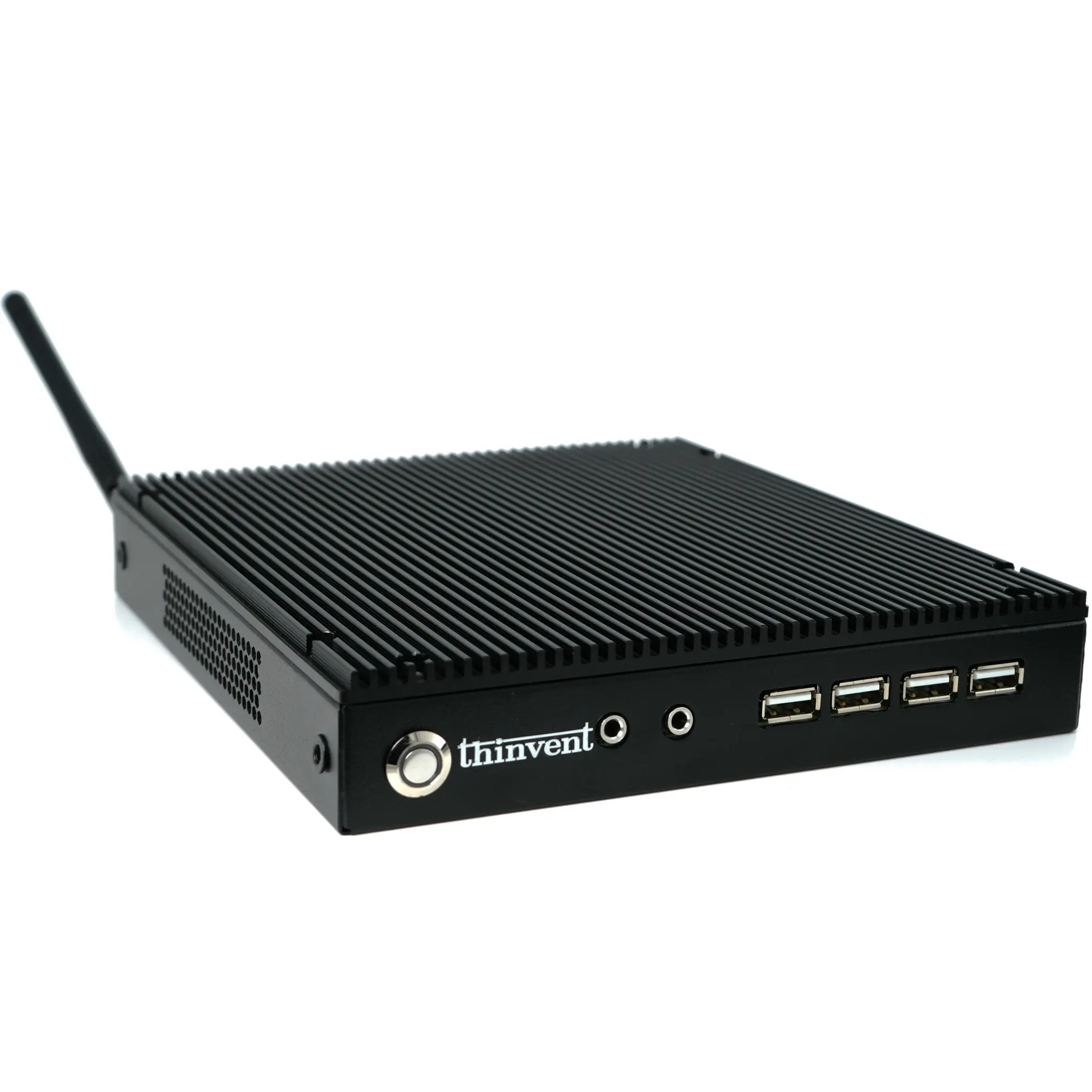
Thinvent designs its industrial computing solutions around reliable, application-matched processors. Our product range includes compact Mini PCs and rugged Industrial PCs equipped with the latest Intel processors, from the efficient N100 for space-constrained, fanless deployments to powerful 13th and 14th Generation Core processors for data-intensive edge computing. Every system is engineered for 24/7 operation, featuring robust thermal management, wide voltage input, and adherence to industrial standards to ensure your critical processes are powered by dependable computational performance.