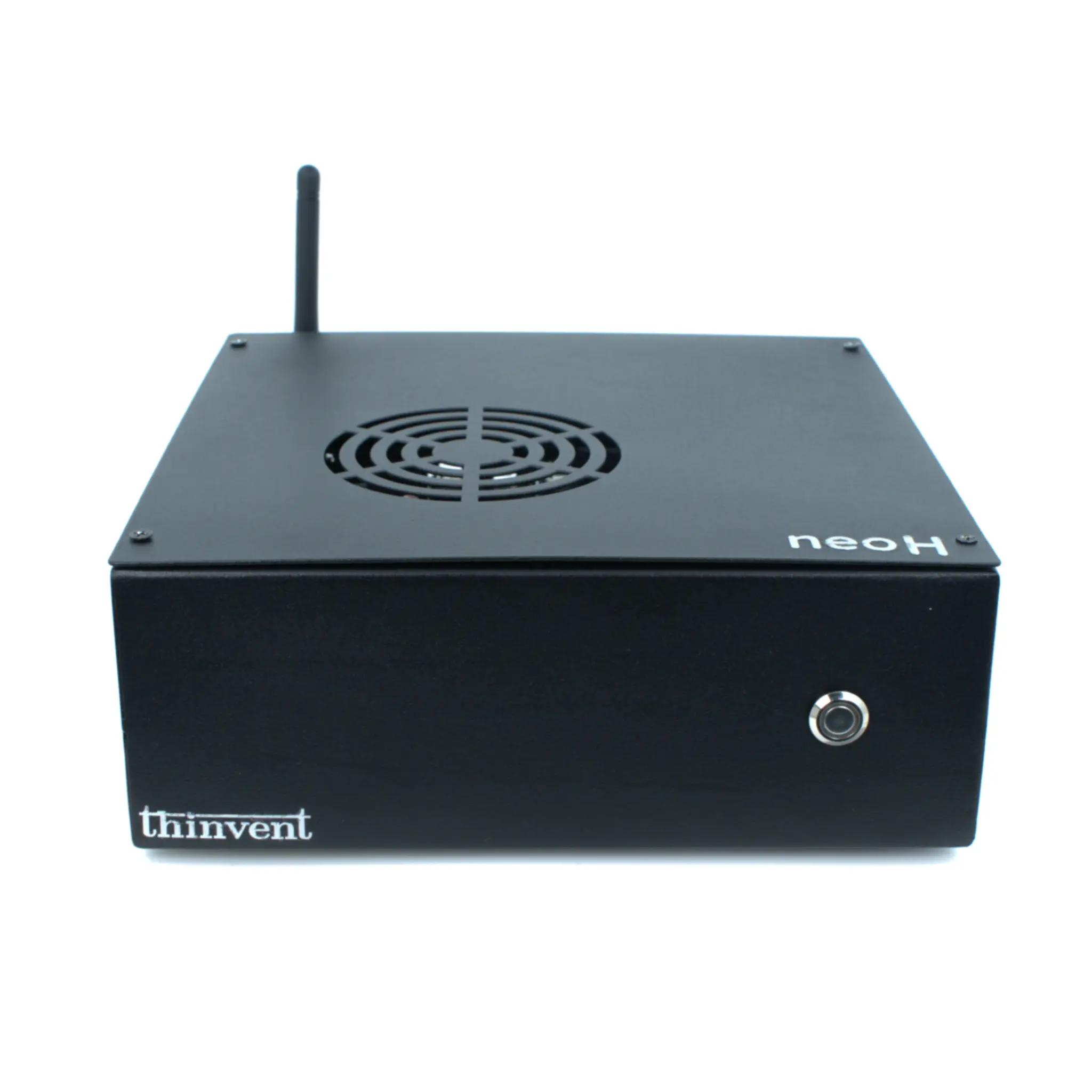
What is a Thin Client?
A thin client is a lightweight, network-dependent computer designed primarily to connect to a centralized server or cloud environment where the majority of processing, storage, and applications reside. Unlike traditional desktop PCs, thin clients have minimal local hardware, focusing on energy efficiency, security, and manageability. They are ideal for environments where consistent performance, low maintenance, and centralized IT control are priorities.
Key Specifications and Technical Details
Modern thin clients are built around low-power, efficient processors like the Intel® N-series (e.g., N100). Key specifications typically include:
-
Processor: Energy-efficient CPUs (e.g., Intel Celeron N, Intel N-series) with 4 or more cores.
-
Memory: 4GB to 16GB of RAM, sufficient for remote desktop protocols and light local tasks.
-
Storage: Small-capacity SSDs (128GB to 256GB) for the host operating system and caching.
-
Form Factor: Ultra-compact, fanless designs for silent operation and deployment in space-constrained areas.
-
Connectivity: Reliable Gigabit Ethernet for stable network connections, alongside multiple USB ports and display outputs like HDMI.
-
Operating System: Often run lightweight or specialized OS versions like Windows IoT, Linux distributions, or thin client-specific software.
Use Cases and Applications
Thin clients are deployed across various industries due to their reliability and ease of management.
-
Virtual Desktop Infrastructure (VDI): The primary use case, providing secure access to virtual desktops from a central server.
-
Call Centers & Office Workstations: For tasks like CRM access, web browsing, and office applications, ensuring uniformity and easy software updates.
-
Digital Signage & Kiosks: Their fanless, compact design makes them perfect for running media players in public displays or interactive kiosks.
-
Healthcare & Education: In hospitals and schools, they offer secure, manageable access to patient records or educational software while protecting sensitive data on the backend.
-
Industrial & Retail: Used in manufacturing for HMIs (Human-Machine Interfaces) and in retail for point-of-sale systems, thanks to their ruggedness and low heat output.
Comparison: Thin Client vs. Traditional Desktop
| Feature | Thin Client | Traditional Desktop PC |
|---|---|---|
| Processing Power | Low to Moderate (relies on server) | High (local processing) |
| Local Storage | Minimal (SSD for OS) | Large (HDD/SSD for data & apps) |
| Hardware Cost | Lower | Higher |
| Energy Consumption | Very Low (10-25W) | Moderate to High (65W+) |
| Management & Security | Centralized, High (OS/image pushed from server) | Decentralized, Moderate (managed individually) |
| Ideal For | Standardized tasks, VDI, secure environments | Graphics-intensive work, gaming, standalone applications |
Thinvent's Range of Thin Client Solutions
Thinvent offers a robust portfolio of industrial-grade thin clients designed for demanding environments. Our solutions, like the Aero Mini PC series, feature fanless cooling for silent, reliable 24/7 operation in offices, factories, and retail spaces. Built with efficient Intel processors, they deliver the perfect balance of performance and power savings for VDI, digital signage, and kiosk applications. With multiple operating system options and compact form factors, Thinvent thin clients provide a scalable, secure, and manageable endpoint solution for global businesses.