Understanding CPU Specifications and Performance
The term "CPU का रेट" (CPU Rate) typically refers to a processor's performance specifications, which determine its speed and capability. A CPU's performance is defined by several key technical parameters, not just a single "rate." The most critical specifications include the number of cores, clock speed (frequency in GHz), cache size, and processor generation. These factors collectively influence how quickly and efficiently a computer can handle tasks, from basic operations to complex computations.
Key CPU Specifications Explained
-
Cores: Modern CPUs contain multiple processing units called cores. More cores allow a processor to handle multiple tasks simultaneously (multitasking) or process parallel workloads faster. Common configurations range from 4 cores for basic computing to 12 or more for high-performance workstations.
-
Clock Speed (Frequency): Measured in Gigahertz (GHz), this indicates how many cycles a CPU can execute per second. A higher clock speed generally means faster processing for single-threaded tasks. Many CPUs also feature a "Max Turbo Frequency" for burst performance.
-
Cache: This is the CPU's onboard high-speed memory. A larger cache (e.g., 6MB, 12MB) allows the processor to store more frequently accessed data close at hand, significantly reducing latency and improving performance.
-
Generation: Processor families (like Intel Core) are updated annually. Newer generations (e.g., 12th, 13th, 14th) offer architectural improvements, better power efficiency, and enhanced integrated graphics compared to older ones, even at similar clock speeds.
Matching CPU Performance to Your Needs
Choosing the right CPU depends entirely on the intended application:
-
Basic Computing & Digital Signage: For web browsing, office applications, and media playback, a modern 4-core processor like the Intel N100 is highly efficient and sufficient.
-
Industrial Automation & IoT Gateways: These applications benefit from reliable, fanless processors with multiple cores to manage sensor data, communication protocols, and control logic simultaneously.
-
High-Performance Workstations: For engineering software, data analysis, or server applications, processors with 6, 10, or 12 cores (like Intel i5 or i7) from the latest generations are necessary to handle intensive workloads.
Thinvent Industrial Computers with Optimized CPUs
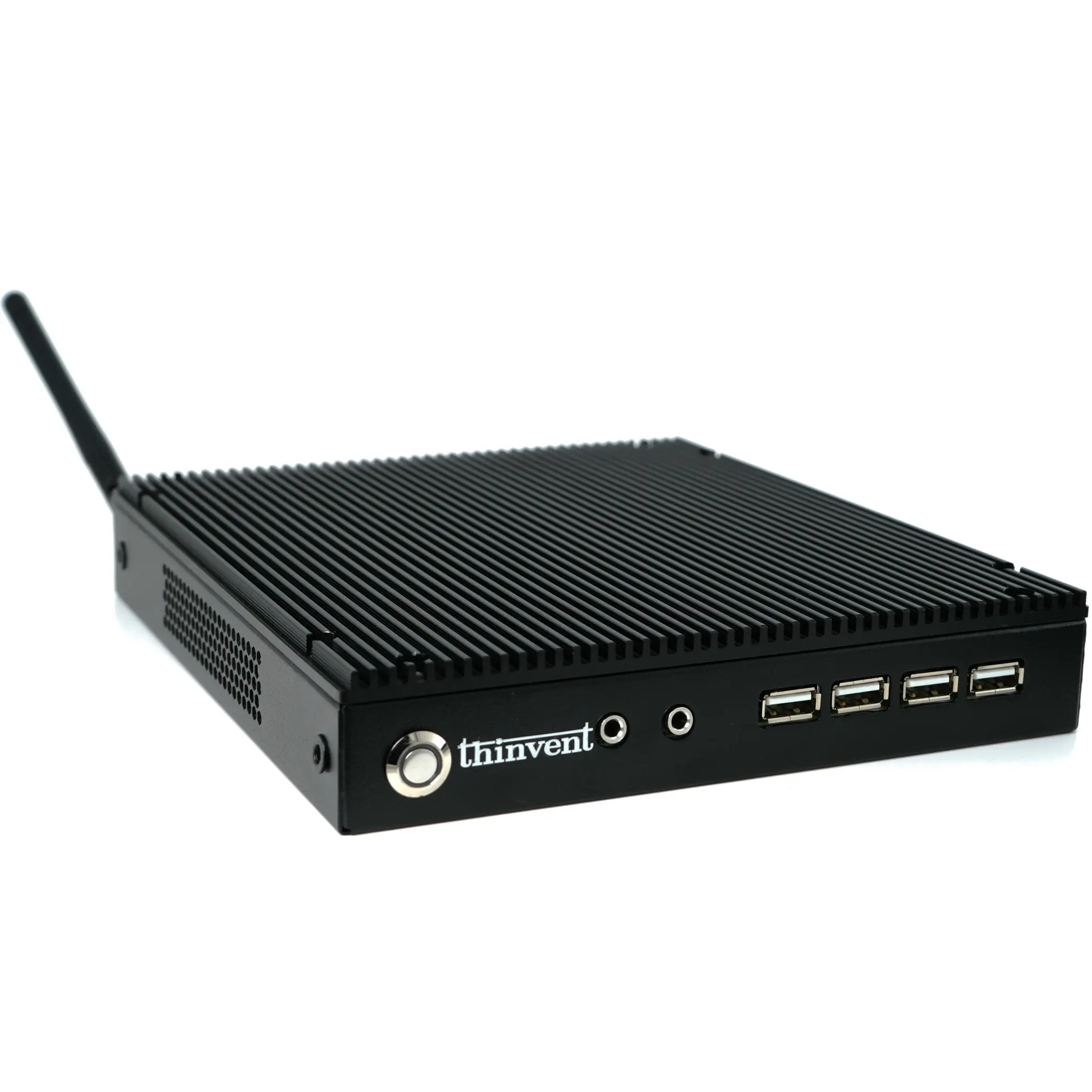
Thinvent designs industrial computing solutions with CPUs carefully selected for reliability and performance in demanding environments. Our product range includes systems powered by efficient Intel processors, from the entry-level N-series perfect for kiosks and thin clients, up to powerful Core-series CPUs for rugged workstations. All our systems are built with fanless cooling for silent, dust-resistant operation in factories, retail spaces, and outdoor installations. Explore our catalog to find the ideal industrial computer with the right CPU performance for your specific operational requirements.