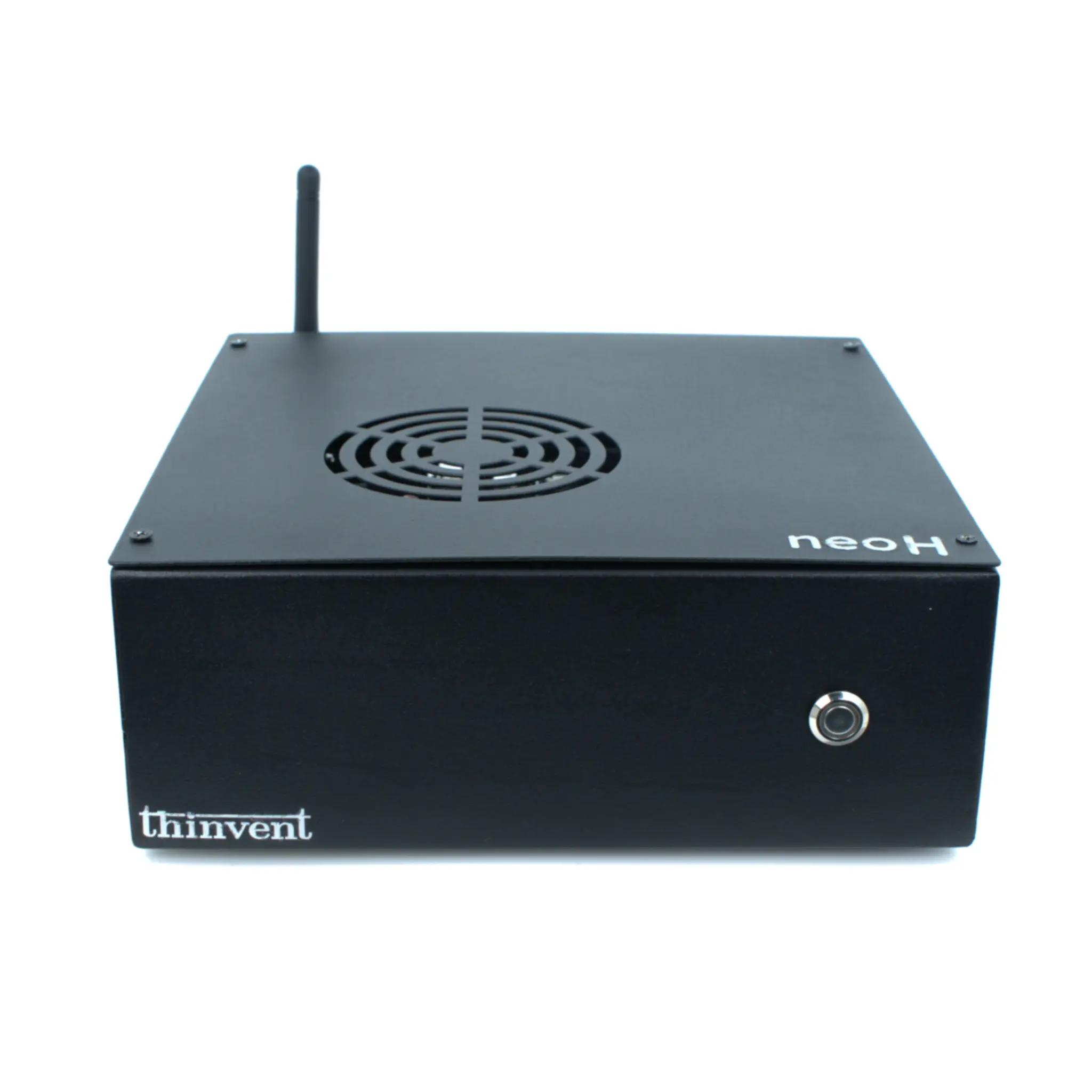
What is a VDI Client?
A VDI (Virtual Desktop Infrastructure) client is a hardware endpoint device used to connect to a centralized virtual desktop hosted on a server. Instead of running applications locally, the client device acts as a secure gateway, streaming the desktop environment, applications, and data from a remote data center. This architecture centralizes management, enhances security, and simplifies IT administration.
Key Specifications for VDI Clients
Effective VDI clients prioritize network connectivity, hardware decoding for media, and power efficiency over raw local compute power. Key technical requirements include:
-
Reliable Ethernet: Gigabit Ethernet (1000 Mbps) is essential for a stable, low-latency connection to the VDI host.
-
Modern Processor: Efficient multi-core CPUs (like Intel's N-series) with integrated graphics that support hardware-accelerated video decoding (e.g., for H.264/265) ensure a smooth user experience.
-
Adequate Memory: 8GB to 16GB of RAM is typically sufficient to handle the client software and OS without bottlenecking the remote session.
-
Compact & Fanless Design: A small form factor (like a Mini PC or Thin Client) with passive cooling ensures silent, reliable operation in diverse environments like offices, hospitals, or retail spaces.
-
Flexible OS Options: Support for various operating systems, including Windows IoT/Pro, Linux distributions, or a stripped-down embedded OS, allows for customization based on security and management needs.
Applications and Use Cases
VDI clients are deployed across industries to enable secure, consistent access to centralized resources.
-
Enterprise & Remote Work: Provides employees with secure access to corporate desktops from any location, using company-managed devices.
-
Healthcare: Clinicians can access patient records and medical applications from any workstation or cart within a hospital, ensuring data security and compliance (e.g., HIPAA).
-
Education & Call Centers: Delivers a standardized software environment to labs or agent stations, simplifying software updates and reducing endpoint maintenance.
-
Industrial & Retail: Used in kiosks, digital signage, and point-of-sale systems where the endpoint hardware is minimal and the business logic runs securely in the data center.
Comparison: Thin Client vs. Mini PC for VDI
| Feature | Thin Client (Dedicated) | Mini PC (General Purpose) |
|---|---|---|
| Primary Role | Optimized solely for VDI/Citrix/RemoteFX protocols. | A full-featured PC that can also function as a VDI endpoint. |
| Local Processing | Minimal; relies entirely on server. | Capable of local processing if needed. |
| Management | Often centrally managed via specific vendor tools. | Can be managed via standard IT tools (e.g., Microsoft Intune). |
| Flexibility | Lower; purpose-built. | Higher; can run local apps alongside VDI. |
| Typical Cost | Often lower upfront. | May be higher, but offers more functionality. |
| Best For | High-security, standardized environments where no local data storage is allowed. | Environments requiring flexibility, occasional local use, or future role changes. |
Thinvent VDI Client Solutions
Thinvent offers a range of robust, fanless industrial computers perfectly suited as reliable VDI endpoints. Our Aero Mini PC series, featuring efficient Intel N-series processors, exemplifies the ideal balance of performance, connectivity, and durability for virtual desktop access. These compact devices provide the essential Gigabit Ethernet, multiple display outputs, and flexible operating system support required for seamless integration into your VDI infrastructure. Built for 24/7 operation in demanding settings, Thinvent clients ensure your workforce has secure, consistent, and high-performance access to their virtual workspaces from anywhere.