What Are Thin Clients for NTT and IPA Environments?
A thin client is a lightweight, secure endpoint device designed to connect to centralized servers or cloud-based virtual desktops. For environments like those specified by NTT (Nippon Telegraph and Telephone) or adhering to IPA (Information-technology Promotion Agency, Japan) guidelines, these devices are critical for creating secure, manageable, and cost-effective IT infrastructures. They operate by processing applications and data on a central server, with only the display, keyboard, and mouse inputs being handled locally. This architecture is ideal for enterprise and government settings where data security, centralized management, and long-term reliability are paramount.
Key Specifications and Technical Details
Modern enterprise-grade thin clients are built for 24/7 operation with low power consumption and fanless, silent cooling. Key specifications include efficient Intel processors (like the N-series), sufficient RAM for smooth remote session operation (typically 8GB or 16GB), and modest local storage (128GB SSD is common) primarily for the host operating system. They feature robust connectivity with Gigabit Ethernet for stable network performance, multiple USB ports for peripherals, and display outputs like HDMI. Crucially, they support a variety of operating systems tailored for thin client use, including specialized embedded Linux distributions, Windows IoT, or standard Windows Pro for flexibility in different virtualization frameworks (VDI).
Primary Use Cases and Applications
Thin clients are deployed in scenarios requiring high security, easy maintenance, and standardized user experiences.
-
Corporate & Government Offices: For secure access to centralized applications and sensitive data, preventing data loss from local devices.
-
Healthcare: In hospitals and clinics for accessing Electronic Health Records (EHR) systems, ensuring patient data remains on secure servers.
-
Education: In computer labs and libraries, providing students with consistent desktop environments that are easy to reset and manage.
-
Call Centers & Banking: For task workers who need reliable access to a limited set of web-based or server-hosted applications.
Comparison: Thin Client vs. Traditional Desktop
| Feature | Thin Client | Traditional Desktop PC |
|---|---|---|
| Data Security | High (data resides on server) | Lower (data stored locally) |
| Management | Centralized, easy software updates & deployment | Decentralized, each unit managed individually |
| Total Cost of Ownership | Lower (less hardware, reduced IT support) | Higher (more hardware, more maintenance) |
| Performance | Dependent on server and network | Dependent on local hardware specs |
| Hardware Lifespan | Longer, less prone to obsolescence | Shorter, may require frequent upgrades |
| Power Consumption | Very Low (often 10-25W) | Moderate to High (65W+) |
Thinvent's Thin Client Solutions
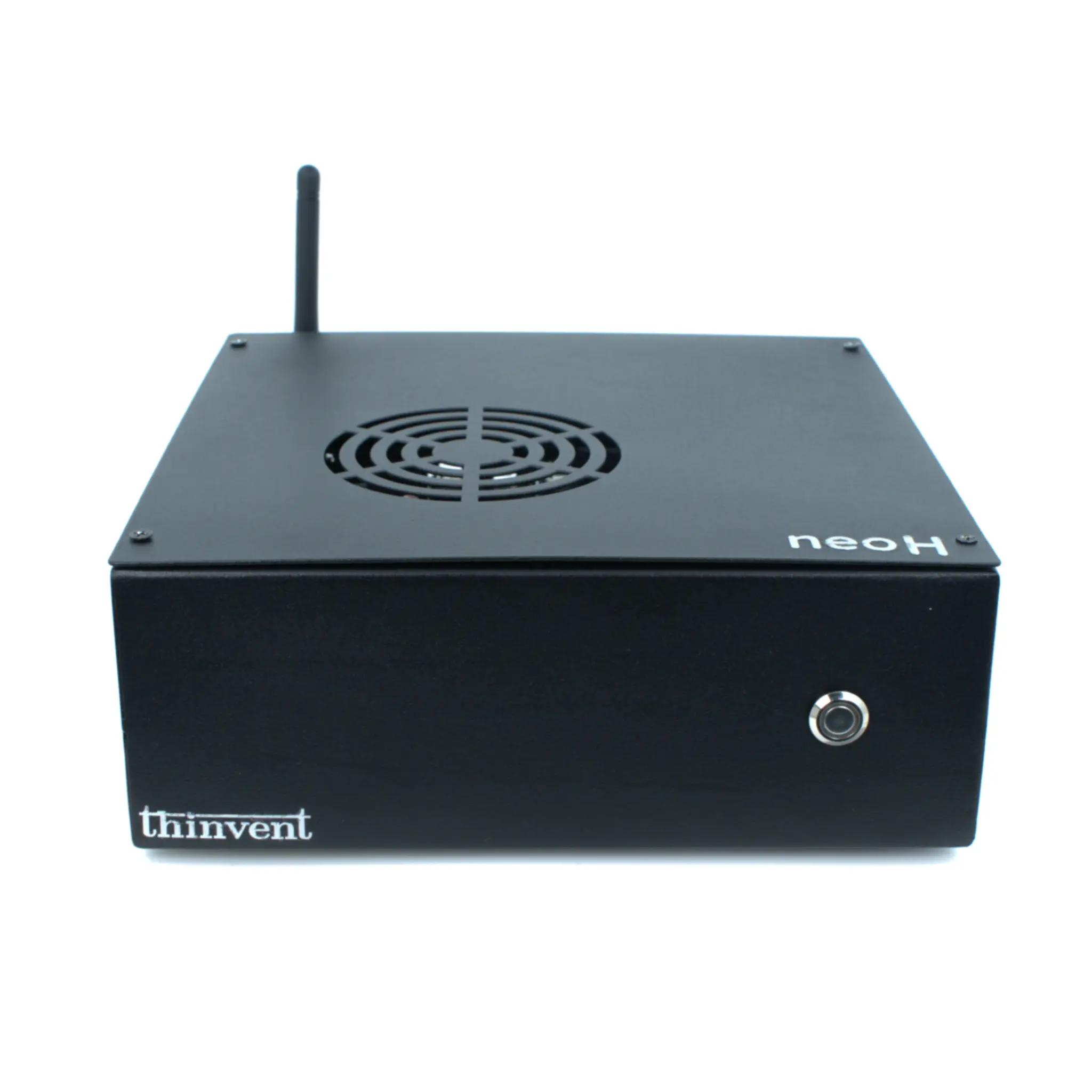
Thinvent offers a range of industrial-grade thin clients perfect for demanding NTT and IPA-aligned environments. Our devices, like the Aero Mini PC series, are engineered for reliability with fanless designs, wide operating temperature ranges, and robust metal chassis. They are highly configurable with options for Intel N-series processors, up to 16GB RAM, various SSD capacities, and a choice of operating systems including Windows 11 IoT/Pro, Ubuntu Linux, and our own Thinux™ Embedded Linux for a streamlined, secure experience. This flexibility ensures you can deploy the exact specification needed for your virtualization platform, whether it's VMware Horizon, Citrix, Microsoft RDS, or others, all while benefiting from low energy use and centralized manageability.