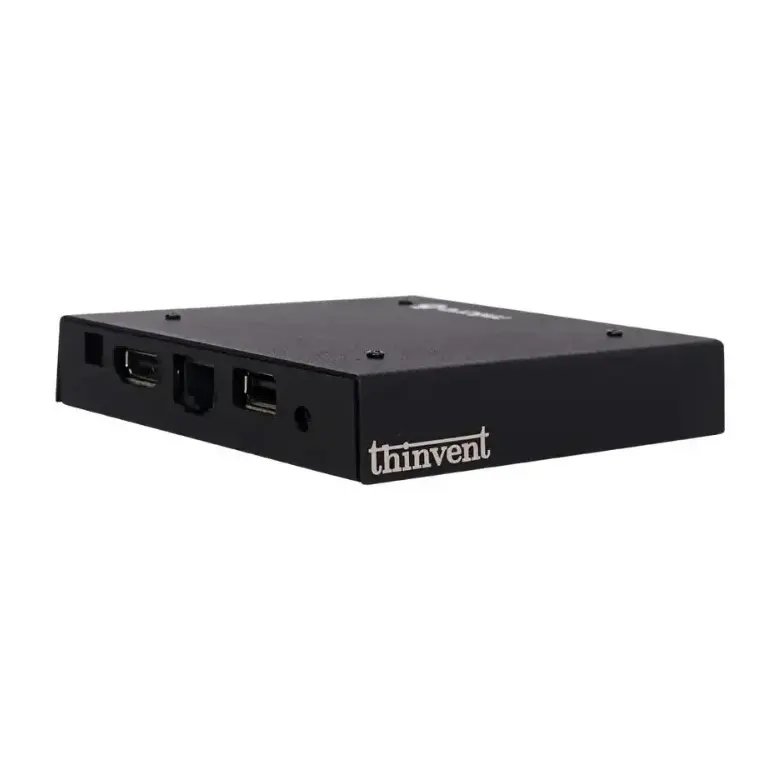
What Is a CPU Enclosure?
A CPU enclosure is the protective housing that surrounds and safeguards the processor, motherboard, memory, storage and power circuitry of a computer. In consumer desktops the enclosure is largely cosmetic, but in industrial and commercial settings the enclosure is a functional component: it determines how the system handles heat, dust, vibration, electrical noise and physical tampering.
When people search for a "CPU enclosure," they are usually looking for one of two things: a rugged computer that houses the CPU in a sealed, mountable chassis, or guidance on how to select an enclosure that will keep a processor running reliably outside a clean office environment.
Why the Enclosure Matters More Than the CPU Alone
A fast processor is only useful if the enclosure can keep it within its thermal limits. Industrial enclosures are typically built from extruded or die-cast aluminium, which acts as a heatsink so the system can run fanless. Fanless designs remove the single most common point of failure in dusty or humid environments — the cooling fan — and allow the PC to be sealed against airborne contaminants.
Other enclosure-level design decisions include:
-
Mounting: DIN rail, VESA, wall-mount or panel-mount options for cabinets and kiosks
-
Ingress protection: sealed front panels and gasketed ports to resist dust and splashes
-
Power input: wide-range DC inputs (commonly 9–36V) with surge and reverse-polarity protection
-
I/O retention: locking connectors or screw-locked serial ports so cables do not work loose under vibration
-
Thermal path: conduction cooling from the CPU to the chassis wall, avoiding internal airflow
Common CPU Enclosure Form Factors
| Form Factor | Typical Enclosure Style | Best Suited To |
|---|---|---|
| Mini PC | Small fanless aluminium box | Digital signage, kiosks, office desks |
| Industrial PC | Sealed metal chassis, DIN/wall mount | Factory floors, control cabinets, outdoor cabinets |
| Thin Client | Compact sealed box, low power | VDI, call centres, shared workstations |
| All-in-One | Panel PC with integrated display | HMI, point-of-sale, machine control |
Choosing the Right Enclosure for Your Application
Start with the environment. A control cabinet beside a furnace has very different needs from a reception desk. Look at ambient temperature, airborne dust, moisture, vibration, available mounting space and the power source available on site. Then match the processor to the workload: low-power Intel Celeron or N-series chips suit always-on signage and thin-client duties, while Intel Core i3 or i5 processors with 16GB or more of RAM handle multi-application industrial workloads, vision systems and database-driven terminals.
Storage and memory choices inside the enclosure also matter. Fanless, ventless designs generally pair well with SSDs because there are no moving parts to fail. If the unit will run 24/7, specify a power supply and thermal design rated for continuous duty rather than peak load.
Thinvent's Products Featuring This Technology
Thinvent builds fanless, sealed enclosures across its range. The Industrial PC IPC3 pairs a 12th-generation Intel Core i3-1215U processor (6 cores, up to 4.4 GHz, 10 MB cache) with 16GB DDR4 RAM and a 1TB SSD inside a rugged chassis, with options for quad DB9 serial ports for legacy equipment, and a choice of Windows 11 Professional, Windows 11 IoT Value, DOS or Thinux Embedded Linux. Thinvent also offers Mini PCs, Thin Clients and All-in-One systems, all designed around the same principle: a CPU enclosure that keeps the electronics cool, clean and running around the clock.