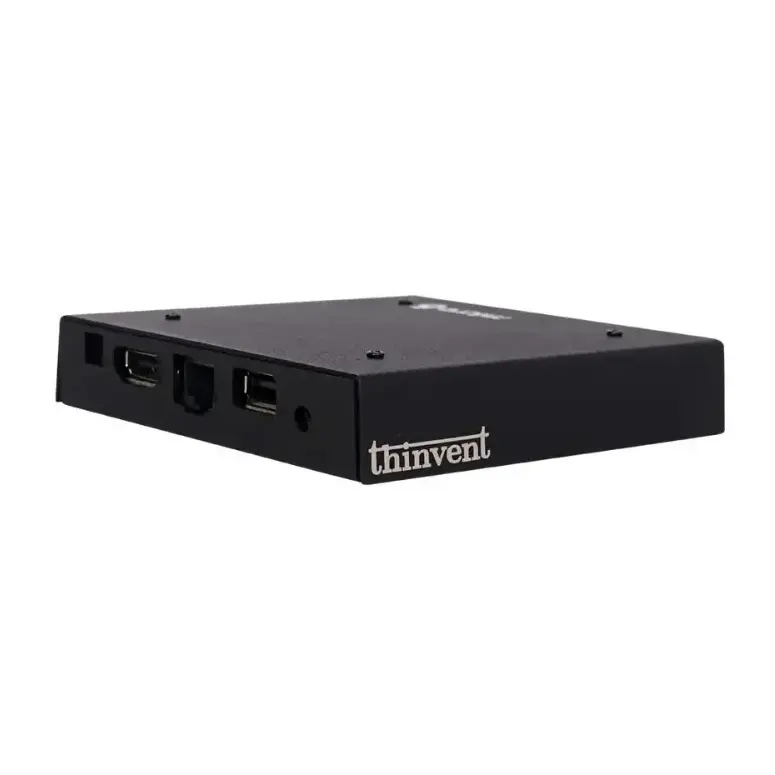
What Are Fanless Computers?
Fanless computers are industrial-grade computing systems designed to operate without internal cooling fans. Instead, they utilize passive cooling techniques, such as advanced heat sinks and thermally conductive chassis, to dissipate heat. This design eliminates moving parts, which is the primary source of failure in traditional computers, leading to significantly enhanced reliability, silent operation, and resistance to dust and particulate ingress.
Key Specifications and Technical Advantages
The core of a modern fanless PC is typically a low-power, high-efficiency processor, such as Intel's N-series. Key specifications include:
-
Processor: Energy-efficient Intel processors (e.g., N100) with 4 or more cores.
-
Memory: Configurations from 8GB to 16GB of DDR4 RAM, suitable for multitasking.
-
Storage: Solid-state drives (SSD) from 128GB to 512GB, offering fast boot times and data access.
-
Connectivity: Multiple Gigabit Ethernet ports, USB 3.2, HDMI/DisplayPort outputs, and optional wireless modules.
-
Power: Low-voltage DC input (e.g., 12V), ideal for 24/7 operation and integration with industrial power systems.
The absence of a fan allows these systems to be completely sealed, achieving an IP rating for protection against dust and moisture. They are also vibration-resistant and can operate in extended temperature ranges, often from -20°C to 60°C.
Ideal Use Cases and Applications
Fanless computers are indispensable in environments where reliability, silence, and durability are paramount. Common applications include:
-
Digital Signage & Kiosks: Silent operation is crucial in retail, hospitality, and public information displays.
-
Industrial Automation: On factory floors where dust, debris, and vibrations are present.
-
IoT Gateways & Edge Computing: Deploying in remote or harsh locations for data acquisition and processing.
-
Transportation: Used in vehicles, trains, and maritime applications due to resistance to vibration and wide temperature tolerance.
-
Medical & Laboratory Equipment: Where silent operation and clean, fanless airflows are required.
Comparison: Fanless vs. Traditional Fan-Cooled PCs
| Feature | Fanless Industrial PC | Traditional Fan-Cooled PC |
|---|---|---|
| Cooling Method | Passive (Heat Sinks/Chassis) | Active (Internal Fans) |
| Noise Level | Silent (0 dB) | Audible (30-50 dB) |
| Dust & Debris | Highly Resistant (Sealed) | Vulnerable (Intakes/Exhausts) |
| Mean Time Between Failures (MTBF) | Very High (>50,000 hours) | Standard |
| Operating Temp Range | Wide (e.g., -20°C to 60°C) | Narrow (typically 5°C to 35°C) |
| Vibration Resistance | Excellent | Poor |
| Typical Form Factor | Compact, Rugged | Larger, Standard |
Thinvent Fanless Computing Solutions
Thinvent specializes in robust, fanless industrial computers built for demanding environments. Our product range includes compact Mini PCs and Industrial PCs that leverage efficient Intel processors to deliver reliable performance without the risk of fan failure. Models like the Aero Mini PC series feature the Intel N100 processor, up to 16GB RAM, and multiple storage and operating system options. These systems are engineered for 24/7 operation, making them perfect for digital signage, automation, edge computing, and any application where durability and silent performance are critical. Explore our catalog to find the ideal fanless solution for your project.